
How Data Silos in Insurance Undermine Broker‑Carrier Relationships
Insurance runs on data, but most teams store that data in different tools and systems that don’t integrate. These gaps create data silos, and those silos slow everything down. They erode trust, delay quotes, and make simple tasks feel more difficult than they should be.
In 2025, data silos are a leading cause of breakdowns in broker-carrier relationships. Brokers want fast responses, and carriers want clean data, but when information stays scattered, neither side gets what they need.
Let’s dive into this article and explain how to help teams remove data silos in insurance with connected workflows, underwriting support, and intelligent automation.
TL;DR (Too Long; Didn’t Read)
- Data silos in insurance keep information trapped across systems, emails, and documents.
- Brokers submit more slowly because they work with incomplete or outdated data.
- Carriers lose time during underwriting due to missing fields, rekeying errors, and poor loss analysis.
- Silos still exist because of legacy systems, PDF-heavy workflows, and tools that never integrated.
- OIP Insurtech helps insurers break data silos with workflow cleanup, underwriting support, and intelligent automation.
- Fixing data flow is the first step toward faster, smarter, and more reliable insurance operations.
What Are Data Silos in Insurance?
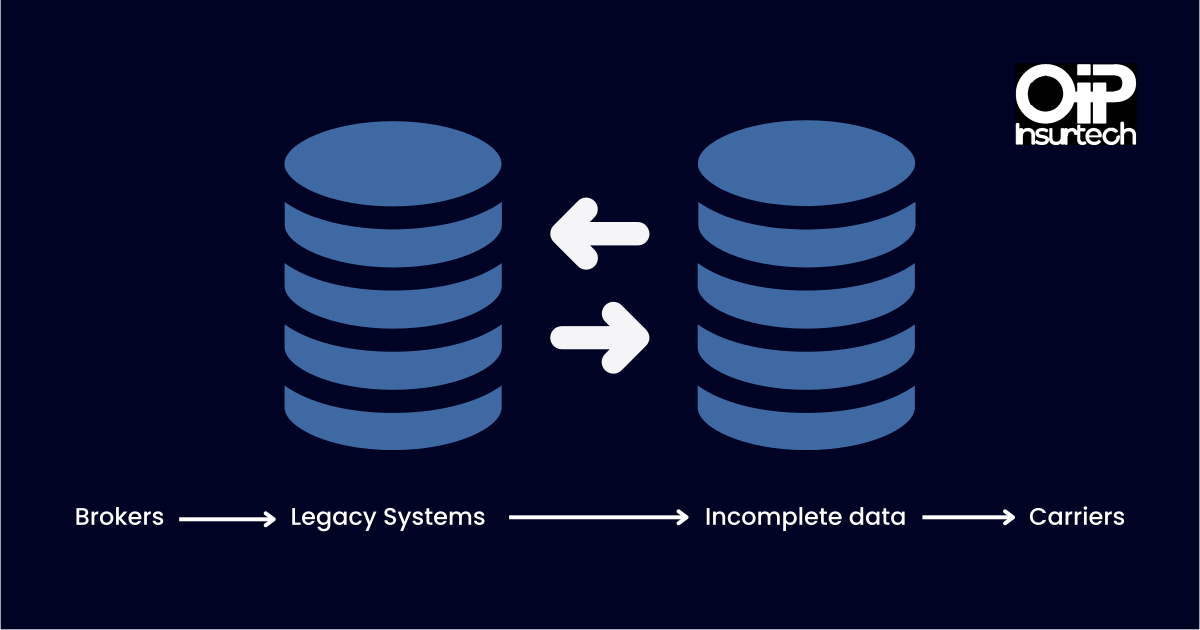
A data silo, in insurance and other industries, occurs when information remains locked within a single system or team. When different departments from your company need this data, they can’t access it.
Data silos force brokers and underwriters to work with incomplete or outdated data, which creates errors and delays. On the other hand, brokers and underwriters may also request access to this data, which can cause delays and require days of waiting.
Silos typically arise from legacy platforms, manual processes, emails, and documents stored on shared drives. Each new step in the process creates another small wall, and those walls add up to significant friction across the entire insurance chain.
How Insurance Data Silos Impact Insurance Brokers
Brokers feel the impact of data silos first. When information stays scattered across emails, portals, and documents, brokers must work twice as hard to prepare a submission.
Data silos in insurance block access to the whole story of a risk, forcing brokers to work with incomplete or outdated information. The results can vary from slower submissions to lost trust, so let’s take a closer look at each negative effect data silos have on insurance brokers.
Slow Submissions
Brokers don’t send incomplete submissions because they want to. The information is simply hard to find. Whether the agent never sent it or sent it to one of your colleagues, it often remains in old emails, folders, spreadsheets, and PDFs that don’t sync.
When the data is scattered, the submission goes out missing pieces, and the carrier has to chase the rest. The quote is automatically delayed, and so are the binder and the policy.
Brokers appear unprepared, even when the real issue is that the data never existed in a single place to begin with, creating additional work for both the broker and the carrier.
Too Much Manual Work
When brokers spend hours digging through emails and files to find the correct numbers and information, they lose time they should spend on clients and markets. Manual work consumes their day, and errors follow closely behind.
We know that each broker and underwriter has spent the first half of their shift replying to carrier emails, chasing subjectivities that are already there, or following up with agents for the third time that week.
A simple copy-and-paste error can cause an entire submission to restart, and data silos turn brokers into data cleaners rather than advisors.
Weaker Relationships with Carriers
Carriers expect complete and organized submissions. When brokers send messy or inconsistent data, it creates more work for the underwriter. Over time, data silos make the broker look difficult to work with, even when they’re doing their best.
Silos make brokers look unreliable, and that hurts trust. Carriers start prioritizing other partners who send cleaner data, even if they don’t necessarily have better expertise.
How Data Silos Impact Insurance Carriers
Insurance carriers feel the pressure of data silos in every part of their operations. When information arrives incomplete or scattered, underwriters lose time, and the entire review process slows down.
Slower Underwriting
Underwriters need the whole picture to price a risk. When data sits across different systems, people waste time searching for details rather than reviewing the account. They open multiple documents, read through email threads, and dig for answers buried in different folders.
More Errors in Underwriting
When silos block data flow, people rekey everything. And manual rekeying always creates mistakes. A simple typo can change the whole submission, and the underwriter must send it back to the broker for correction.
Both sides will end up with extra work instead of being productive. Silos also force renewals and new business into unnecessarily long email chains.

Poor Loss Analysis
Loss runs come in many formats and levels of quality. Some arrive scanned, some are missing columns, and some don’t follow any standard. Silos make it even harder for carriers to compare data across years.
Underwriters only see part of the story, so pricing becomes harder and less accurate. It also weakens risk selection and slows down the review.
Why Data Silos Still Exist
Insurance teams use many systems that have been built over the years. Companies add new tools on top of old ones, and nothing is connected or integrated. Workflows grew around email because that was the easiest way to move information.
Most insurers still deal with legacy systems from the 90s, PDF-based communication, internal knowledge that isn’t shared, and teams using different platforms. All of this creates silos that never go away on their own.
People do not cause silos. The tools cause them, and the processes the people must use.
If you’d like to know more about the impact of legacy systems in insurance underwriting, click here to read our recent article on 7 Hidden Risks of Legacy Systems in Specialty Underwriting.
The Hidden Cost of Data Silos
Data silos drain both time and money. Slow quote responses cause lost opportunities. Manual workforces grow larger than needed. Errors force rework, delaying brokers and frustrating underwriters.
Accuracy drops when teams can’t see the whole picture. Customer experience suffers because clients expect fast answers. The companies that fix their data flow win more business, and the ones that don’t get left behind.
Silos in insurance look small on the surface, but they have a significant impact on underwriting speed and partner satisfaction.
How OIP Insurtech Helps Break Data Silos
OIP Insurtech helps insurers simplify and connect their workflows so data moves where it should. Our teams support underwriting operations, document processing, and intelligent automation that removes the friction caused by scattered data.
We turn unstructured submissions, SOVs, loss runs, and supplements into clean, ready-to-use data so underwriters no longer dig through emails or hunt for missing values. We combine underwriting support, tech experts with insurance backgrounds, and insurance-tailored automation to remove data silos from your workflows.
Unlike traditional outsourcing, we keep knowledge inside your organization by building processes that capture your rules and expertise, turning your data into an asset that grows stronger over time. Leave us a message here to get started.
How To Strengthen Broker-Carrier Relationships
When data flows smoothly, brokers send better submissions and carriers respond faster. Underwriters no longer waste hours searching for information or cleaning files. Brokers get quotes on time, and carriers work with confidence.
Strong relationships form over time and are based on trust. The sooner you fix your own mistakes, the sooner you can expect your partners to trust you.
The Bottom Line
Data silos are the number one cause of weakened broker-carrier relationships in insurance underwriting. Slow decisions lead to errors, reduce visibility, and push simple tasks into long email chains, but they don’t have to stay this way.
With OIP Insurtech, insurers remove silos and build workflows that support both sides of the relationship. We help teams clean their data, automate repetitive work, and deliver underwriting support that streamlines every process.
If you want faster workflows, fewer errors, and stronger broker-carrier partnerships, the solution starts with fixing your data flow, and we’re here to help.