New
Workflow Intelligence Diagnostic: uncover friction, capacity leaks, and AI opportunities in 9-12 weeks.
Insurance leaders explore why outdated workflows hold back AI returns, and how starting with business needs, strengthening data foundations, and keeping experts involved can turn AI investment into operational value.
Insurance leaders explore why outdated workflows hold back AI returns, and how starting with business needs, strengthening data foundations, and keeping experts involved can turn AI investment into operational value.
The most important conversation in insurance AI right now isn't about the technology itself, but what's beneath it.
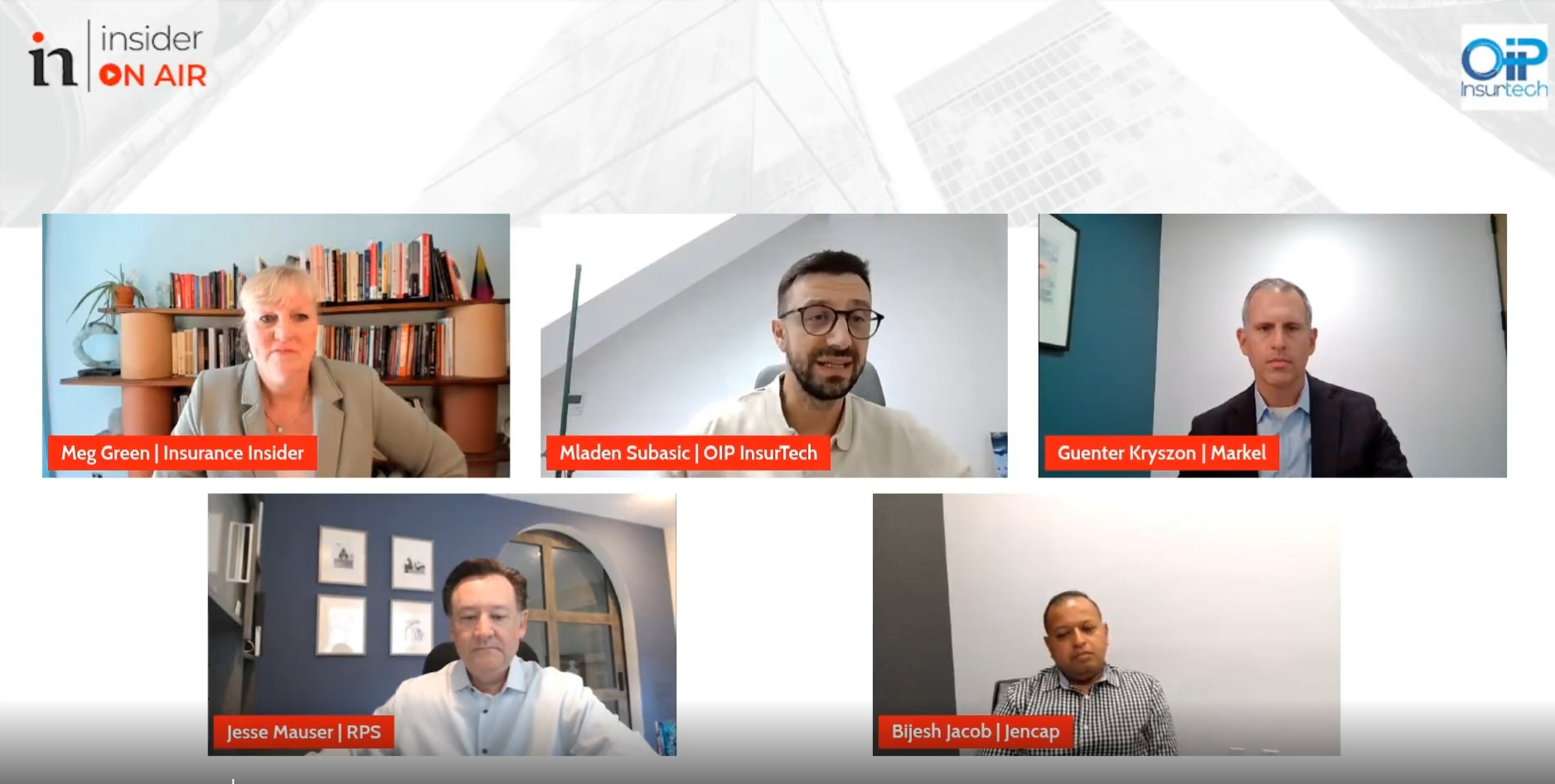
That was the theme of a webinar OIP Insurtech ran with Insurance Insider US, titled "The Hidden Drag on Insurance AI ROI: Broken Processes". Mladen Subasic, Chief Product Officer at OIP and the man behind BoundAI, was joined by Gunter Kryzen (Chief Underwriting Officer, Markel), Bajish Jacob (Chief Digital Officer, GenCap) and Jesse Mouser (Chief Data Officer, RPS) for a one-hour session that went straight to the heart of the operational issues that most organizations are dealing with in silence.
The webinar kicked off with a question that, on the surface, is simple but rarely gets a simple answer: what does AI readiness actually mean in practice?
Mladen's answer was straightforward. "I don't see AI readiness in any way at all being about having a properly fleshed-out multi-year AI strategy or a series of consultancy workshops. The question is: can you reliably embed AI technologies into your key workflow, your key transaction? Once you can do that, it becomes a systems issue rather than an AI readiness issue."
His suggestion was to test readiness by running a high-stakes, cross-cutting workflow and learning from it. What you learn is whether the inboxes are correctly set up, whether the underwriters are routing the work to the right places, whether the systems can be accessed programmatically. That's what AI readiness actually looks like in practice.
The panel ran an audience poll: will AI have eliminated the human underwriter in five years? 90% said no. The panel agreed.
Gunter Kryzen at Markel strongly believes that the more complex the large bespoke risks, the more the market will move in that direction. As the market grows in scale and complexity, having an underwriter in the loop is essential. The relationship, judgment, and accountability remain human. Disruption is certainly occurring, but it's predominantly at the smaller, more commoditized end of the market.
Mladen added the growth angle. "As we're reclaiming back the time, we're literally taking time that was spent in other areas and putting it back into the growth and innovation side. You can't focus where you need to focus without that."
When asked whether most insurers are implementing AI on top of broken workflows, Gunter is upfront about the state of the backend systems insurers have accumulated over the years. Some are still DOS-based, and those systems still feed the ledgers, actuarial data, and statutory reporting. You can't fix the problem by putting AI on top of that.
Mladen's framing was sharper: "It's not necessarily broken; it's just from a different era. An era where information was flowing between teams and people, not between teams, people, and AI." He suggested finding workflows where you can close the loop with a few touchpoints to the core systems, get value quickly, and then spiral out from there.
Each panelist took away one thing for the audience.
Jesse Mouser kept it really simple: start with the workflow, not the AI. Ask yourself which part of the business needs to improve and what's actually stopping it, rather than asking where AI can be applied.
Gunter Kryzen brought it back to basics: understand the business need first, then build the AI around it. Data is the bedrock everything else is built on.
Bajish Jacob said: adopt, pick your battles, start with efficiency, and the steps from here to a more agentic future are the ones you can actually control.
Mladen closed the session with a point that balanced out the hour. "Don't fall into the shiny object syndrome. This isn't a race but a marathon. Keep your experts close. Whatever we're doing with AI, the experts have to be in the loop. This is the long game."