New
Workflow Intelligence Diagnostic: uncover friction, capacity leaks, and AI opportunities in 9-12 weeks.
Senior executives from CRC, Burns & Wilcox, Amwins, RPS, and others gathered at OIP Insurtech’s WSIA roundtable to discuss where AI in specialty insurance is delivering, where the ROI is still unclear, and what execution challenges the market is navigating.
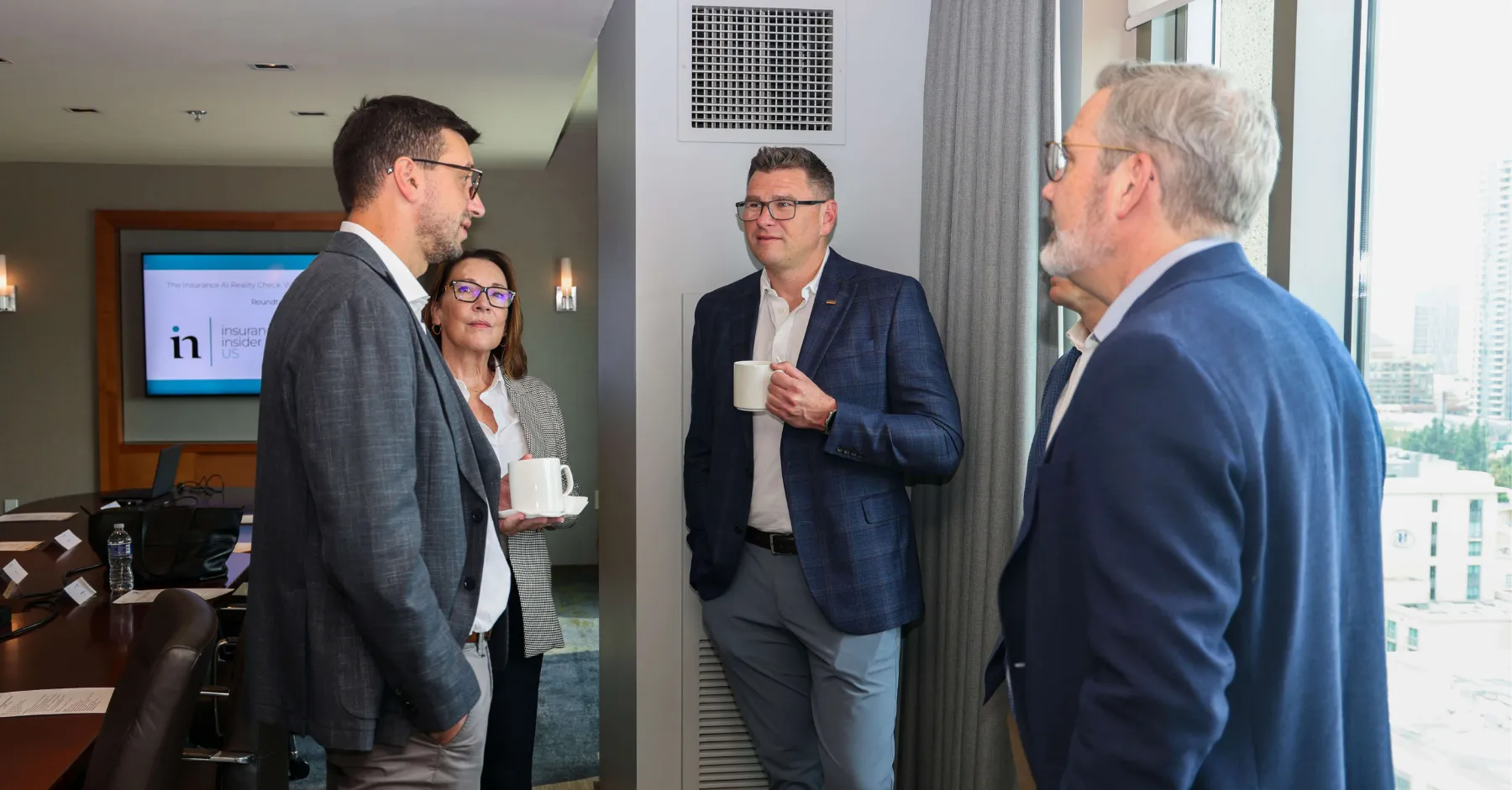
Senior executives from CRC, Burns & Wilcox, Amwins, RPS, and others gathered at OIP Insurtech’s WSIA roundtable to discuss where AI in specialty insurance is delivering, where the ROI is still unclear, and what execution challenges the market is navigating.
Whether AI is actually generating a return on investment in the specialty insurance space still doesn't have a simple answer. That was one of the clearest takeaways from a roundtable at this year's WSIA Annual Marketplace in San Diego, hosted by Insurance Insider US and sponsored by OIP Insurtech.
The panel, "The Insurance AI Reality Check: Why the Execution is Stalling," brought together senior execs from across the specialty and E&S markets for a fairly frank 90-minute discussion. The panelists were: David Hurst (Chief Digital Officer, CRC), Rich Fusinski (CIO and SVP, Burns & Wilcox), Ray Ash (Head of Financial Lines, Westfield), Brandon Mezick (Head of Digital Underwriting, Bowhead), Robert Kimmel (CEO, K2), Justin Gress (COO, HDI Global US), William Nichols (EVP AI, Amwins), James McKenney (Chief Digital Officer, RPS), Mladen Subasic and Bevin Beatovic (OIP Insurtech), who co-chaired the session.
There was a very strong feeling in the room that AI is actually delivering value. You can make decisions much quicker. The mundane, time-consuming tasks can be automated. The experienced underwriter gets time back to spend on clients, risks, and relationships rather than processing and packaging the data that comes in.
They were less confident on the balance sheet. One participant noted a very small improvement of one or two points in the ratios, but overall the execs were happy to stick to anecdotes when asked for hard numbers. The ROI discussion in the AI space for specialty insurance is still very much a work in progress,, and the panel was quite upfront about that.
Even the most skeptical in the room admitted they weren't standing still. Some were going deep on AI investment. Others confessed they might not be able to ignore the technology as they had thought they could.
Beyond the ROI debate,, the discussion touched on several themes that senior people across the specialty market are clearly grappling with.
The buy vs build question came up fairly early on. Most panel members already have some form of general AI tool in their organization. The emphasis was clearly on the benefit of working with a specialist vendor with real domain expertise in insurance systems and workflows, rather than applying a generic AI tool to an industry that needs to be understood to be useful.
Staying focused is a challenge in itself. The range of potential AI applications in insurance is so broad that discipline is essential. Without a clear way to prioritize, you risk pursuing use cases that look interesting but deliver no operational value.
The discussion shifted when one of the execs made a point that really got the room going: AI is absolutely superb at the mundane, time-consuming job of taking in data and processing it, packaging it up. That was a real, tangible point that dispelled some of the general unease. The practical benefit of getting the underwriters out of the admin work and into the actual client and risk work is very real, very tangible, and is available right now.
The execs in the room all agreed that AI will be a massive differentiator in the insurance market. The question is whether the industry can move fast enough to benefit. Insurance has traditionally moved quickly on new technology, and the pace of AI development is putting that to the test.
The real conversation that came out of the OIP roundtable was that the industry is very much on board with AI, very much in the dark about how to measure it, and very much aware that the window to get the sequencing right is not infinite.
OIP Insurtech ran the roundtable as part of our wider work with carriers, MGAs, and brokers as they implement AI in their specialty and E&S operations. We created the Workflow Intelligence Diagnostic to help organizations understand where they are in their operations before making any technology investment decisions. For more information, please visit oipinsurtech.com/workflow-intelligence-diagnostic.